In the session
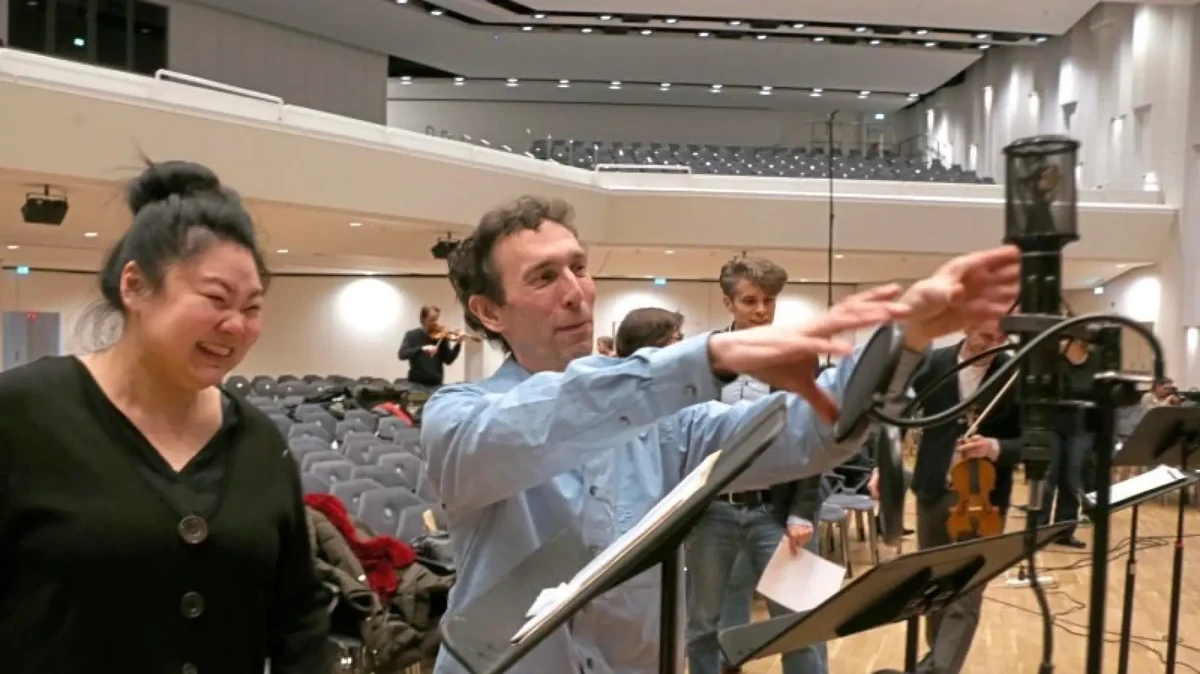
Early in a session, I tend to give the musicians room to play. Over those first takes, I listen for how their interpretation unfolds and how they work together.
Some artists enjoy a close musical exchange with the producer. Others prefer to get on with playing, knowing that someone they trust is listening from the control room. That balance can shift within a session. I can get deeply involved when a passage or a question of interpretation calls for it. Judging when to step in and when to give the players room is part of the work.
The larger span
One of the useful things about listening from outside the performance is being able to keep the larger span in mind while the players’ attention is elsewhere. A passage may have changed over several takes; I can listen for how it now sits with what precedes and follows it. Sometimes that is worth discussing. Sometimes the change makes sense once I hear more.
I enjoy that gradual familiarity with an interpretation: beginning to recognise the weight of an arrival, or how much remains deliberately unresolved. It informs the decisions later, when several equally persuasive performances may offer quite different possibilities for the recording.
Continuity across takes
The most interesting editing choices often arise between takes that are each convincing on their own terms. Two passages may join imperceptibly in sound yet belong to different readings: one has prepared a tension that the other never quite releases. I find it useful to listen well beyond the proposed join before deciding whether they belong together.
Then there are performances whose particular concentration is difficult to recover in a patch. An exchange between players or a freedom of timing may give a longer passage its character. I am interested in how much of that can remain intact, and in whether a local improvement is worth what it would change elsewhere. These are often the choices I most enjoy considering with an artist.
Recorded perspective
A balance that reveals an inner voice can also give it more prominence than the players intend. How much detail to bring forward is a question I return to: there is pleasure in hearing further into a texture, but the relationships within it matter just as much.
The same question arises with distance and acoustic space. I listen for how the recorded perspective carries the players’ articulation and the proportions they establish in the room. Intimacy, depth and clarity can pull in different directions; the interpretation gives those choices their context.
The musical exchange
A comment can be musically sound and still arrive at the wrong moment. I try to judge what needs attention now, what can wait for playback, and when the most useful thing is simply to let the next take happen. Where something does need addressing, I aim to be specific.
There is real pleasure in a session where that understanding becomes easy: a few words are enough, a question can be asked freely, or everyone is content to carry on. Long-standing collaborations with Antonio Meneses, La Serenissima, Kamus and the Ostrobothnian Chamber Orchestra developed over several projects. Each new recording still begins with listening to what is happening this time.
The finished performance
After close work on individual passages, I like to return to an uninterrupted listen. Does the recording still convey the performance that held our attention in the room? Are the decisions we have made helping it retain its freedom and character? This is often where I hear most clearly whether the work is finished.
The responsibilities I undertake vary with the project and its artistic team. Each recording in the catalogue identifies the contribution precisely.
Remote sessions
Remote production has been a regular part of my work for years. I listen in my own studio, in an acoustic I know intimately. The musicians have much more freedom to choose where and when they record.
I collaborate with engineers across Europe, and the same arrangement can work further afield. The local engineer sets up and records at the venue. With a reliable internet connection, I hear a high-quality live feed and can speak directly with the artists and engineer. The technology has come a long way. It feels as though I’m in the room next door.